Once again, I'm going to be redirecting you to the "airplanes" page for my intro on that page (ignore all the stuff about the airplanes though)
So to start, I live in Colorado and have been on most of the trains around here, so most of it, sadly, is in Colorado.
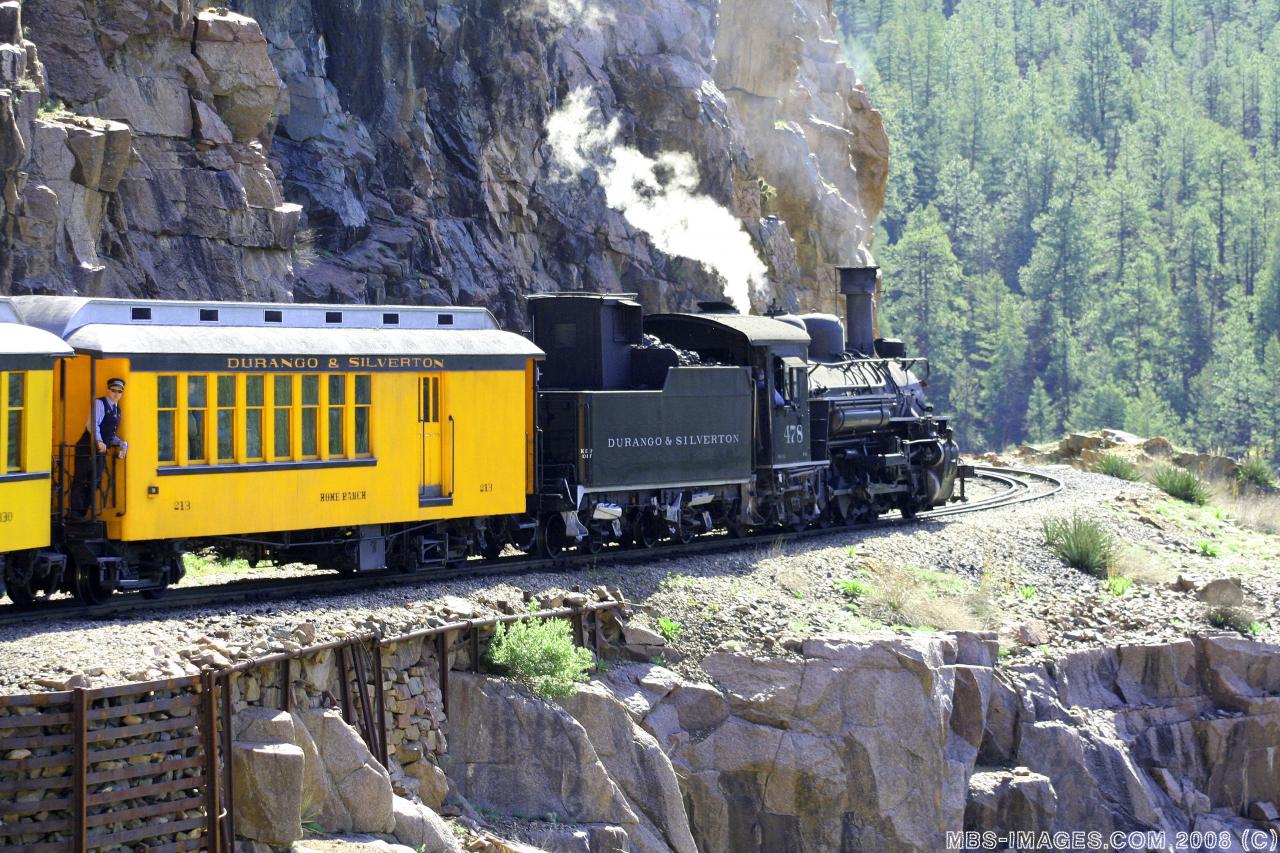
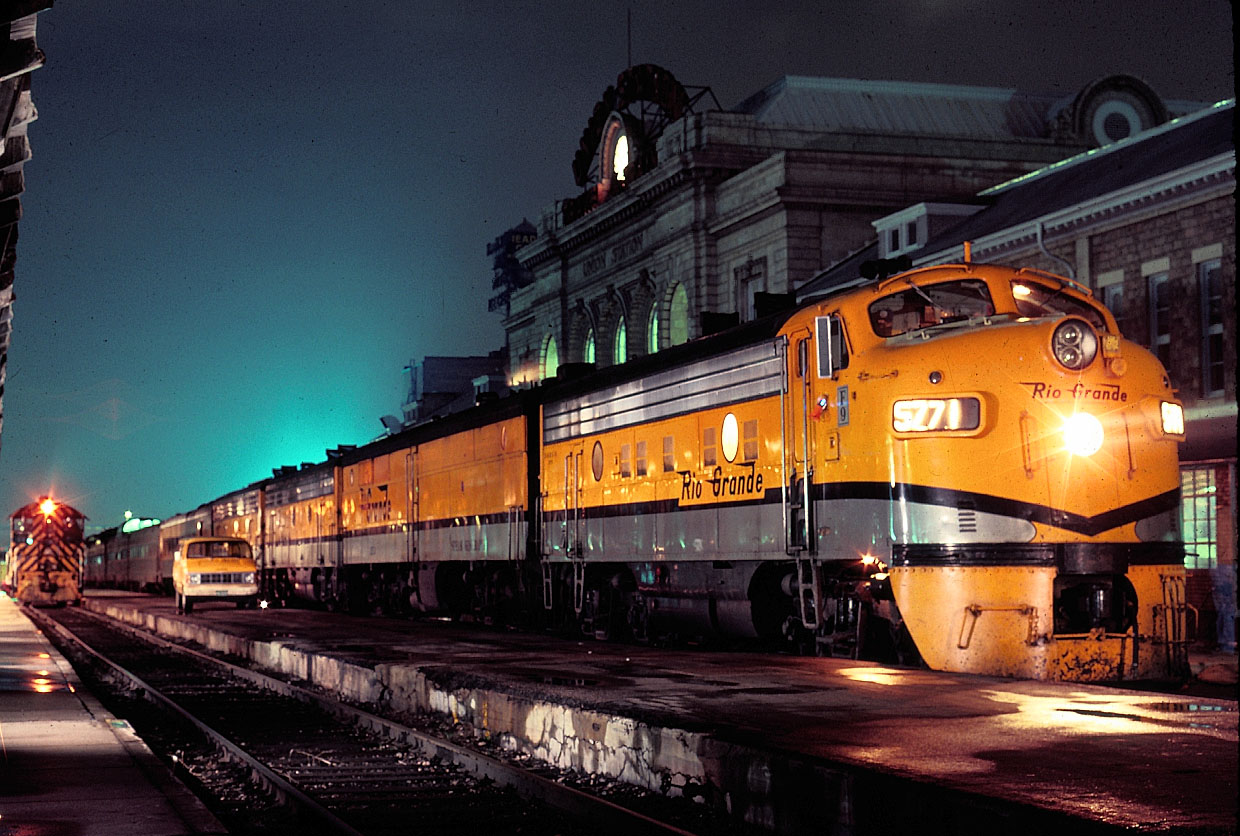
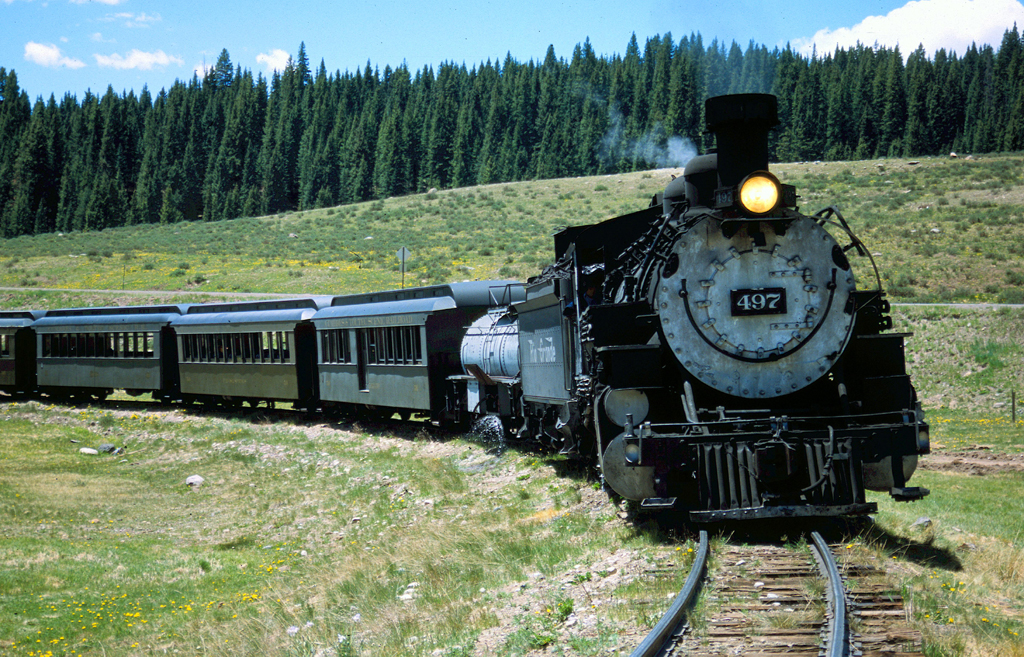
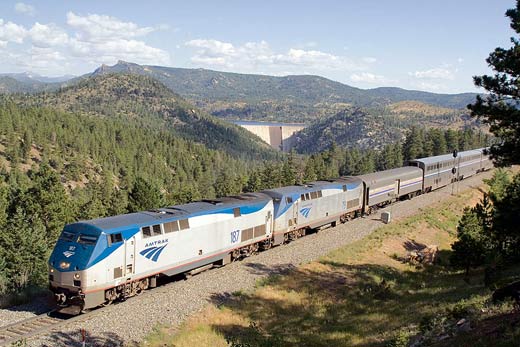
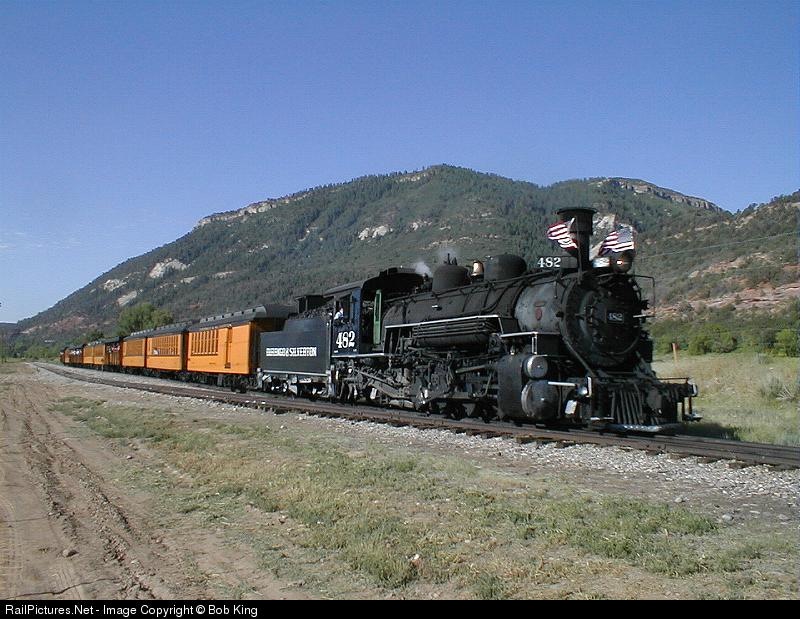
Back a long time ago, two railroads decided to buld the first trans-continental railroad across the United States. The two railroads were the Union Pacific and the Southern Pacific. The Southern Pacific Railroad is no longe around today, it was bought by the Union Pacific. In about 1881, William Jackson Palmer started the Denver and Rio Grande Railroad in the Rockey Mountains of Colorado. Palmer built three tracks branching out of the mining town of Silverton, Colorado, and a mainline ran from Silverton into Durango, a small rail town built bu Palmer to have a rest stop for engeneers and crew before riding the rails up to Alamosa, Colorado. There it met up with the southern branch from Chama, New Mexico that ran up through Antinito, Colorado. At the start of World War I, all of the macinery was needed for the war and the trains were shipped off, but after World War I ended, they were welcomed back. Around this time, Desil engines were getting more and more popular and The Rio Grande started up a non- Profit train called the Ski Train. The Ski Train had to be halted for World War II, but after the war it was back in service. After WWII came the short -lived stramlined age. The California Zephyr, the Burlington Zephyrs, the City trains, and the Super Cheif were the kings of this age. In 1957, Amtrak was created and they bought most of the passenger service was bought from the railroads. The Denver and Rio Grande didn't accept to their offer and created the Rio Grande Zephyr out of the remains of their section of the California Zephyr. Amtrak eventually got hold of the Rio Grande Zephyr and recreated the California Zephyr, which now runs from Las Angeles to Chicago. The remains of the line from Durango to Silverton became the D&SNGRR (Durango & Silverton Narrow Guage Rail Road & Museam). The remains of the line from Chama to Antinito became the Cumbres & Toltec senic Railroad. The Ski Train was running regularly on Friday, Saturday, and Sunday to and from Winter Park, Colorado until 2009.